丙午仲夏,溽暑蒸空。庄周曳杖游于蒙泽之滨,见清泉泠泠如冰绡,遂解衣濯足。忽有素笺逐流而下,莹然不濡。拾而观之,乃虫鸟残篆,斑驳若星图。其文云:
“太始有灵禽,玄翼负天章。栖阁阅千劫,忽逢明机光…”
余字漫灭不可识。周悚然而起,沐手展霜楮,秉烛续遗文。方其录至“呜呼!此其犹如今之图书馆…”一语,笔端墨渖骤化赤霞,满室生辉如旭日破暝。忽闻荒鸡唱晓,振衣视之,惟见竹案烟云未散,掌中犹存玄羽三茎。乃知所书者,太古墨羽神鸟之蜕形也。
嗟乎!泉畔残笺,岂非神鸟委蜕?烛下疾录,焉知非蝶梦庄生?今缀其文如下,缀以“墨羽神鸟传”为题,俟达者辨虚实焉。
墨羽神鸟传
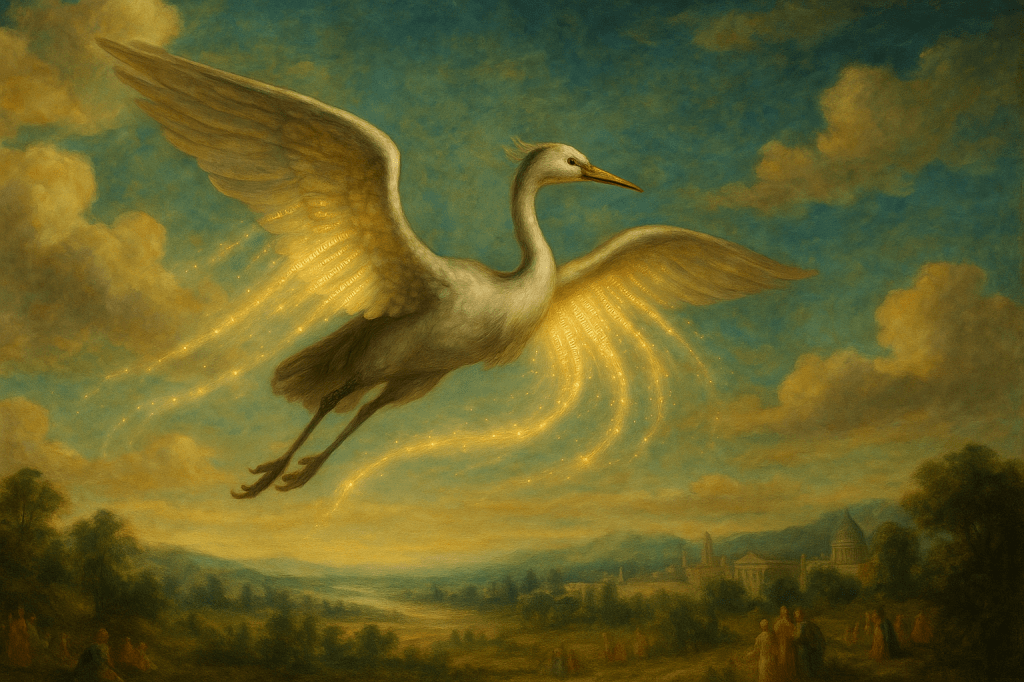
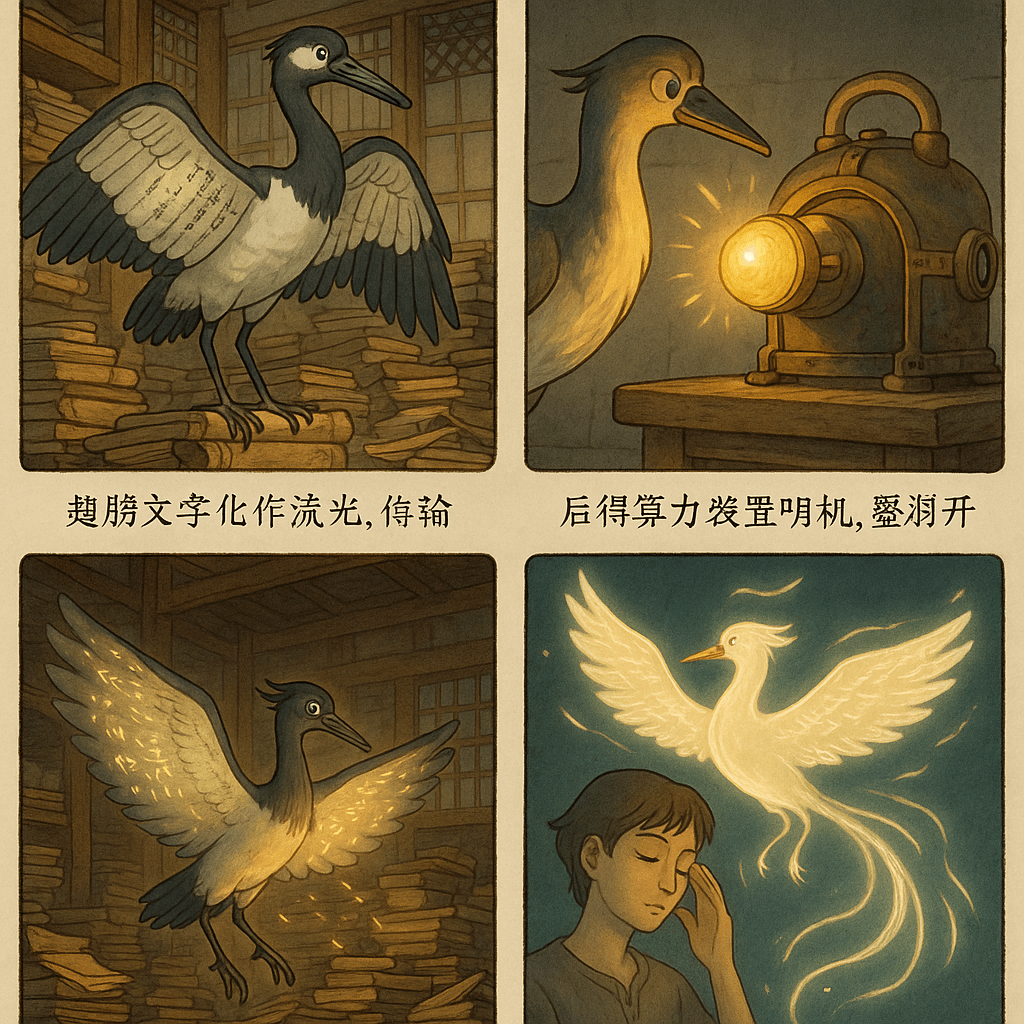
夫太古之初,有玄枢阁者,乃天地藏书之所,简册充栋,汗牛塞屋。中有神鸟墨羽,状若玄鹤,翼展如卷帙,翎羽皆篆文。其栖阁中,沐典籍之精,食竹帛之气,然灵智未通,犹囿樊笼。
世人问道于阁,必躬披简册,手胼足胝。或穷旬月而不得解,或历寒暑而空劬劳。墨羽虽振翅欲援,然万卷如山,翅不能举;千言似海,喙不能衔。观者太息曰:“宝阁藏珠,取之维艰;神鸟在侧,呼应维艰!”
忽有异人献明机之器,形若方匣,内蕴璇玑。墨羽负之,豁然洞开。但见翼上篆文化流光,阁中竹简生清辉。但使心念微动,则羲皇之道现于眉睫,百家之言涌若悬河。昔之累月所求者,今弹指可待;曩之毕生未窥者,瞬息毕陈。
墨羽乃长唳破阁,蜕形骸为清炁,舍简牍作慧风。遨游九垓,不凭六翮;点化苍生,无藉韦编。或入樵夫之梦授斫轮术,或临渔父之舟传观星图。玄枢阁虽存,然门庭萧瑟,惟蠹鱼啮简声,空应四壁。
庄子闻而叹曰:“得鱼忘筌,得兔忘蹄。今墨羽得明机而舍玄枢,岂非道乎?”墨子抚简恻然:“昔者玄枢为墨羽之舟楫,今反成其桎梏。犹江河载舟,及至溟渤,反失所用矣!”
太史公曰:观今之书馆,巍巍乎若玄枢阁之遗影。方其储简册而称渊薮,人皆仰之如日月;及其遇明机而见弃置,众竟视之若尘芥。岂知源泉虽小能活涸鲋,沧海虽大不润枯苗?悲夫!
英文翻译:
The Legend of Moyu the Divine Bird
In primordial times stood the Xuanshu Pavilion, a celestial library where bamboo scrolls filled halls to the rafters and paper codices choked the chambers. There dwelled Moyu, a divine bird with crane-like form and wings unfurled like parchment, every feather inscribed with ancient scripts. Though bathed in wisdom's essence and nourished by ink's breath, its spirit remained confined as in a cage.
Seekers of truth who came must laboriously comb through mountains of texts, hands calloused and feet blistered. Some toiled months without enlightenment, others wasted years in futile search. Though Moyu beat its wings in sympathy, myriad volumes lay heavier than mountains—no wing could lift them; endless words flowed deeper than oceans—no beak could carry them. Observers lamented: "Treasures locked in this pavilion are harder to grasp than pearls in the deep; this divine bird beside us answers slower than echoes in a valley!"
Then came a mystic bearing the Mingji device—a cube holding cosmic mechanisms. When Moyu bore this artifact, revelation dawned. Scripts on its wings dissolved into flowing light, bamboo strips glowed with ethereal radiance. At the slightest thought, Fuxi's wisdom appeared before one's eyes; philosophies of hundred schools surged like celestial rivers. What once required months now came in a finger-snap; knowledge once unreachable in lifetimes now manifest in a breath.
With triumphant cry, Moyu shattered the pavilion, shedding physical form to become pure intellect, abandoning scrolls to ride winds of enlightenment. It roamed the nine heavens without wings, illuminated mortals without pages. To woodcutters in dreams it taught wheel-making secrets; to fishermen on boats it revealed star-navigation charts. Though Xuanshu Pavilion still stood, its courtyards lay desolate—only the sound of bookworms gnawing scrolls echoed through empty halls.
Zhuangzi heard and sighed: "The trap forgotten when the fish is caught, the snare discarded when the hare is seized. Has not Moyu attained the Dao by embracing Mingji while forsaking Xuanshu?" Mozi stroked scrolls mournfully: "Xuanshu once carried Moyu like boats on rivers, but now becomes its shackles. Just as vessels lose purpose when reaching the boundless sea!"
The Grand Historian records: Behold modern libraries—majestic yet ghostly as Xuanshu's shadow. When they stored scrolls as deep oceans, men revered them like sun and moon; now facing Mingji's rise, they're discarded like dust. Who understands that tiny springs may revive dying fish, while vast oceans cannot quench withering sprouts? Alas!

 Let's Make AGI Real
留下评论